Claude Skills for Ecommerce: What They Are, How They Run, and Which 80 Are Worth Saving
The Claude Skills an ecommerce team actually runs, sorted by the department that owns them and by the outcome they move: revenue, cash, time or risk. 80 in total, each one ending in a decision rather than a paragraph.
What is a Claude skill?
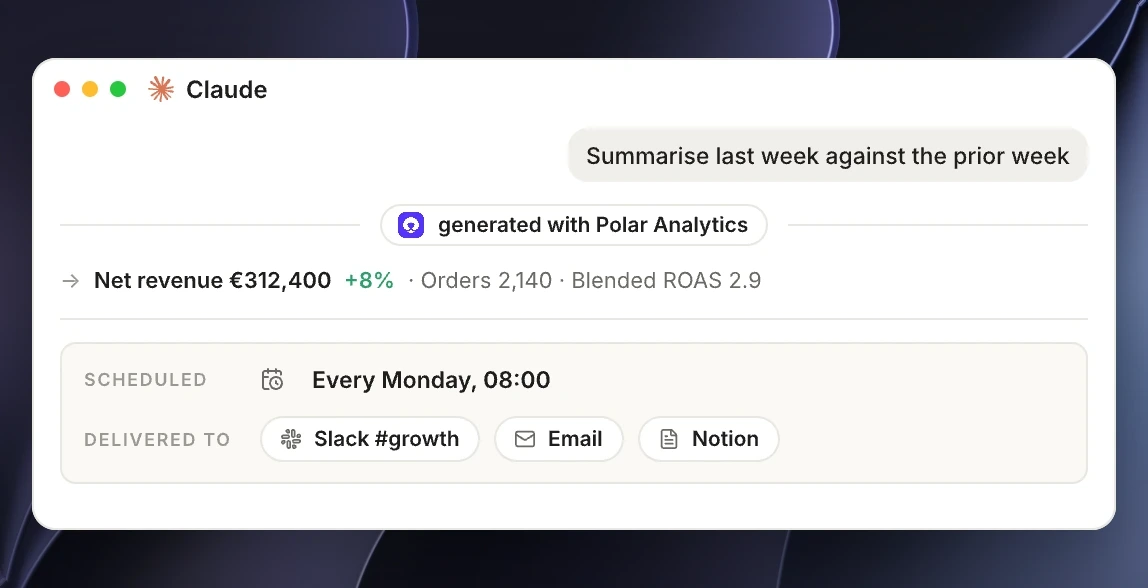
A Claude skill is a pre-built agent that solves one specific ecommerce decision — a bid change, a PDP rewrite, a reorder draft. It reads your governed store data through Polar’s MCP server, proposes an action, and waits for you to publish it.
A pre-built context file Claude reads before every task
Instead of re-explaining your business in every chat, the skill packages the instructions, metric definitions and output format once. Claude loads it, runs the task the same way every time, and returns a consistent artifact.
Skills vs prompts: what’s the difference
A prompt is a one-off request that depends on how you phrase it. A skill is versioned and repeatable: same workflow, same guardrails, same metric definitions — whoever runs it, whenever they run it.
How skills connect to your live store data via MCP
Polar unifies Shopify, Amazon, TikTok Shop, ads and email into one governed model, then exposes it to Claude via MCP — 45+ connectors, no CSV exports, no SQL. Claude queries Polar, never your raw store admin.
Why Claude Alone Isn't Enough
Point an LLM at an ungoverned warehouse and it answers confidently, plausibly, and differently every time you ask.
Raw Shopify data is ungoverned by default
Same query, three different SQL interpretations. Without structured modeling, queries shift and return drifting numbers.
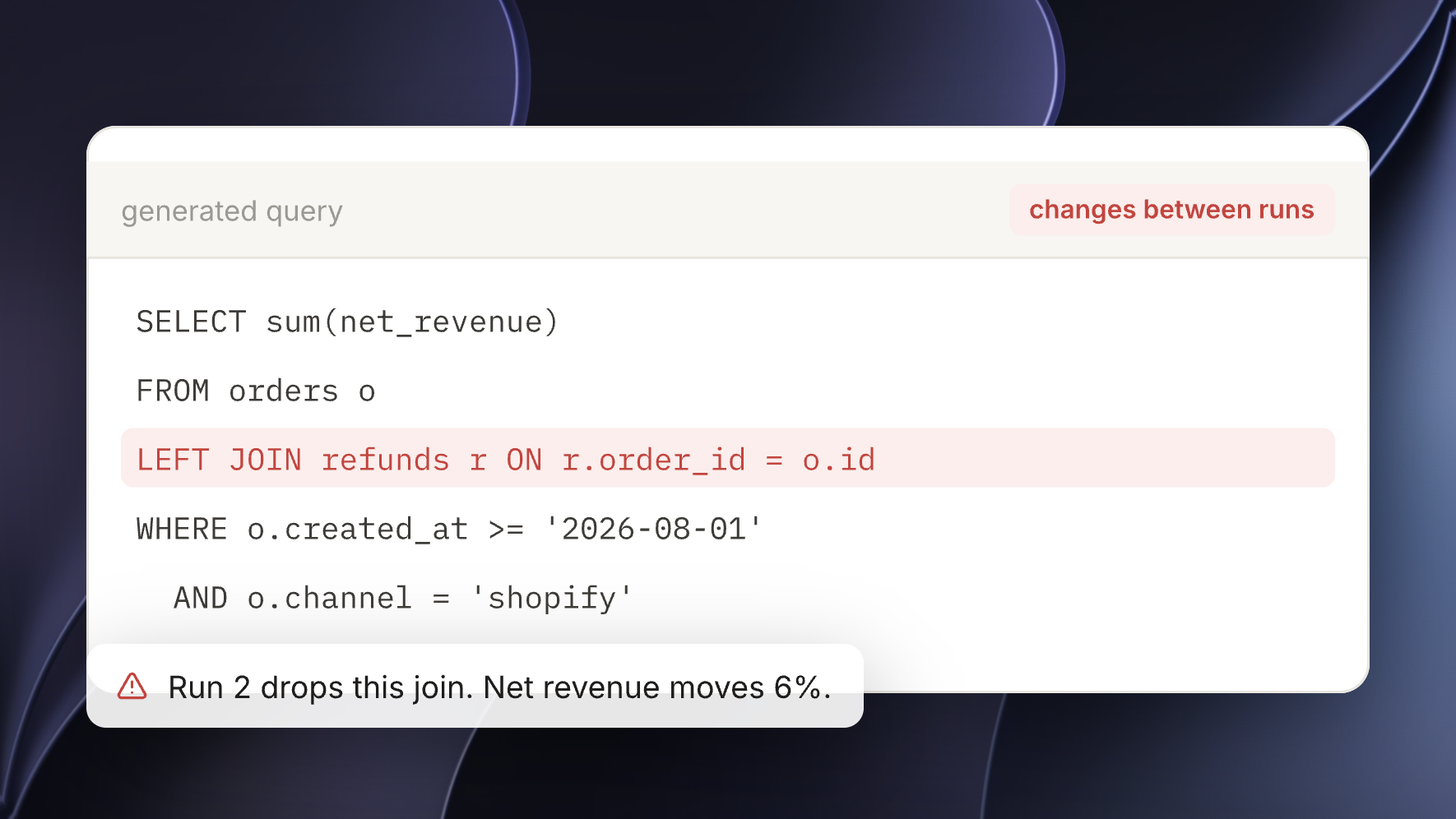
Five definitions of ROAS, zero automatic fix
Your financial lead and your ad strategist don’t mean the same thing by ‘gross sales.’ Without preset definitions, numbers clash.
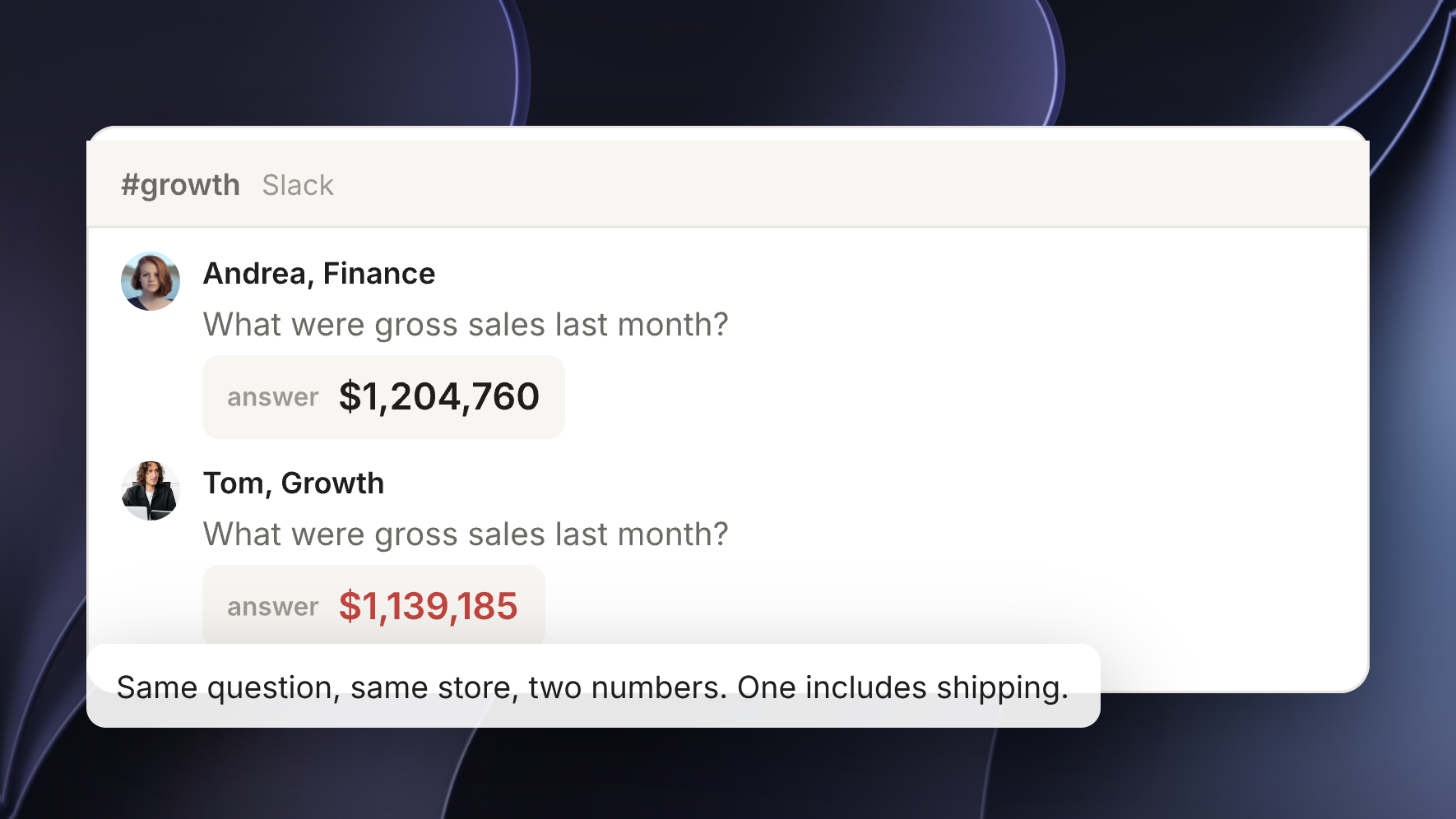
Why a semantic layer matters
Align metrics once. Under a governed model, Claude operates with fixed parameters. Net Revenue is locked. Blended CAC stays clean.
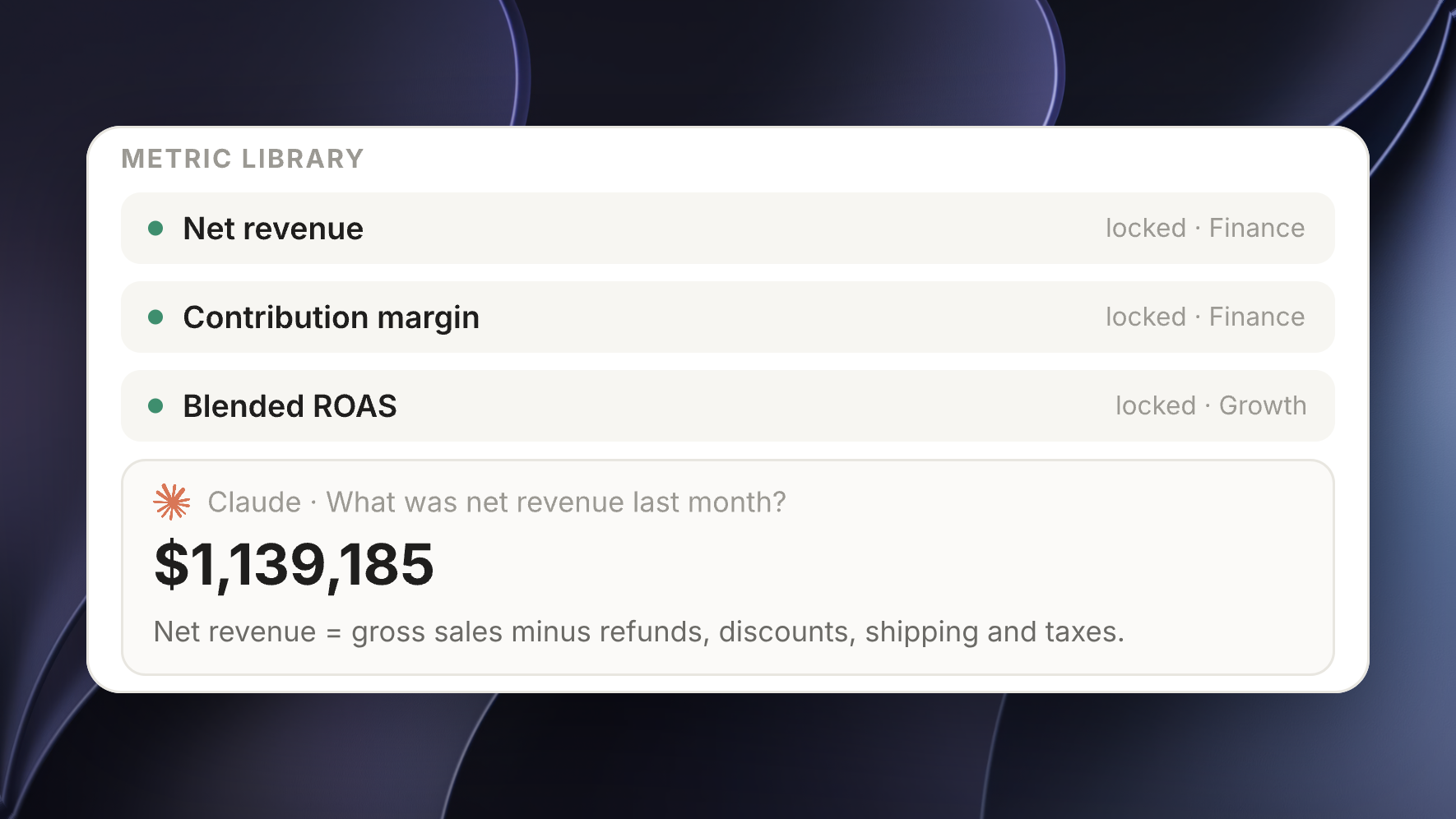
How Polar skills are different
Every skill runs on governed data — not a CSV
Other skill directories hand Claude a spreadsheet and hope. Polar skills query your live, unified data model through MCP: Shopify, Amazon, TikTok Shop, ads and email — always current, never exported.
One definition per metric across all skills
ROAS means the same thing in the media buying skill, the reporting skill and the attribution skill. One warehouse, one metric layer — so two skills never give your team two different numbers.
Claude proposes. Your team publishes. Always.
No skill writes to your store, your ads or your inbox on its own. Every output is a draft with a full audit trail. You review, edit if needed, and publish. No black box.
How to run your first skill
Connect your stack to Polar
Shopify, Amazon, TikTok Shop, Meta, Google, Klaviyo: 45+ connectors, no SQL and no configuration. Polar unifies everything into one governed data model, which is what every skill reads from.
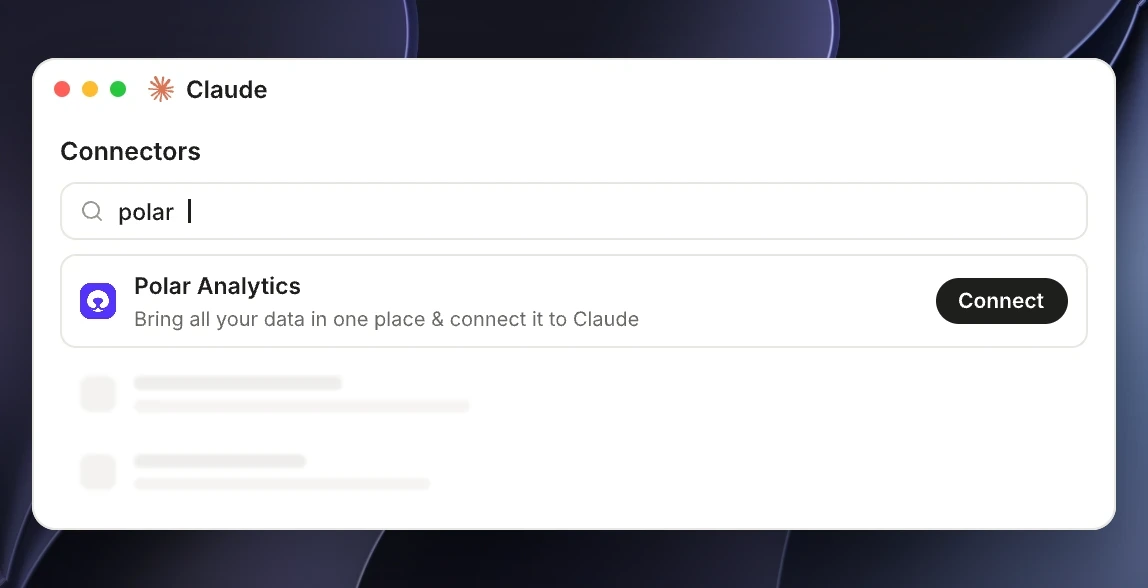
Pick a skill for your team
Browse by department or by outcome, open the skill and load it into Claude. The workflow, the metric definitions and the guardrails are already packaged inside it, so there is nothing to brief.
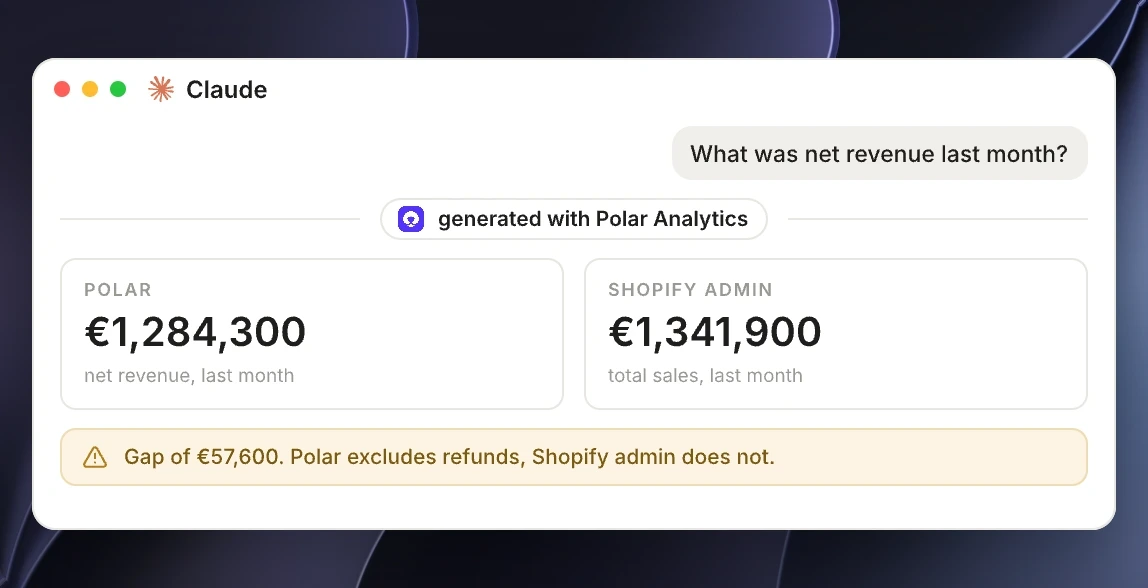
Run it, then publish
Claude reads your live data through MCP and proposes the action: a bid table, a PDP rewrite, a PO draft. Nothing is written to your store or your ad accounts until you review it and publish. That is the loop.