

Welcome to the Polar Analytics Blog
Editor's pick

Recently published
October 27, 2026
How to Build an AI Agent That Reviews Your Meta Ads Every Day
A Meta ads AI agent is a scheduled prompt that reads your ad and store data every morning, compares yesterday with the trailing 7 days, applies the targets you set, and recommends which ad sets to pause, hold or scale. Your team reviews the list and approves any budget change.

October 23, 2026
17 Best AI Tools for Ecommerce in 2026
Discover the top 17 AI tools for ecommerce that can boost sales, improve customer service, and streamline operations. From analytics for data-driven insights to automating support, this guide highlights must-have tools for 2026. Plus, download the free AI readiness assessment and checklist to kickstart your AI transformation today.
August 26, 2026
GA4 Attribution Models: Three Options and One Ecommerce Problem
Open GA4 attribution settings and you get three models, not the nine most guides describe. The three that remain decide how GA4 divides the credit it captured, and none touch what it never recorded. Here is what each credits, and where reconciling happens instead.
August 21, 2026
Influencer Marketing Attribution: How to Credit Creators Without Double Counting
The creator agency reports 400 orders, Shopify shows 180 code redemptions, and the ad platforms claim most of the same revenue. All three are right, because they count different things. Here is how to dedupe creator signals into one number per creator, and one decision.
August 20, 2026
Custom Attribution Model: How to Set the Weights and Prove They Work
Meta says it drove 40 orders, Google says 32, Shopify credits Direct. A custom attribution model is how you stop accepting someone else's credit rule. Here is the arithmetic for each weighting scheme on one journey, plus the checks that keep it honest.

August 20, 2026
Last Click Attribution: What It Really Credits, and When It Misleads You
Four dashboards, one week of orders, four different answers, and none of the tools is broken. Last click attribution pays whatever stood closest to checkout. Here is what it overpays, what it cannot see at all, and when it is still the right model.
August 19, 2026
Data-Driven Attribution: How Google's Model Works and What It Cannot See
Google made data-driven attribution the default and removed the alternatives, so the number in your Google Ads column now comes from a model you cannot inspect. Here is how it works, the four things it structurally cannot see, and how to read it without being misled.
August 19, 2026
Multi-Touch Attribution for Ecommerce: How the Models Work and When to Stop Trusting Them
Six attribution models, one $200 order, six different answers, and a reported ROAS that swings from 0.0x to 4.0x on identical spend. This guide shows the credit splits side by side, flags the four models Google removed from Analytics 4, and covers what to trust instead.
August 18, 2026
Cross-Channel Marketing Attribution: How to Stop Double-Counting Revenue
Add up what Meta, Google, Klaviyo and TikTok each claim they drove last month and the total beats what Shopify actually banked. Every platform counts correctly by its own rules, and those rules overlap. Here is how to measure your over-claim and fix it.
August 18, 2026
Revenue Attribution for Ecommerce: How to Tie Marketing Spend to Actual Revenue
Meta says one number, Google Analytics 4 says another, Shopify says a third, and all three are defensible. Revenue attribution decides which one runs the business. Inside: the ten models, the setting that moves your numbers more than the model does, and how to grade channels on margin.
August 17, 2026
Amazon Attribution: What It Tracks, What It Misses, and How to Read It
Amazon Attribution reports one number for the week, Meta reports a bigger one, and the Amazon payout report shows a third. All three are internally correct, which is the actual problem. Here is how to set the tool up, what its fourteen day last touch window hides, and how to reconcile it.

August 17, 2026
Marketing Attribution Software: How to Evaluate It in 2026
Every list ranking marketing attribution software puts its own author at number one. This is the method instead: what the four kinds of tool can and cannot answer, the eight questions that predict whether one survives month three, and a 30 day evaluation you can run yourself.
August 14, 2026
Marketing Attribution Models Explained: One Journey, Nine Different Answers
Five dashboards, five different answers, one order. Attribution models are rules for splitting credit, and the rule you pick decides which channel gets defunded. See one ecommerce journey scored nine ways, why the lookback window matters more than the model, and how to choose.
August 14, 2026
Repeat Purchase Rate in Ecommerce: Formula, Benchmarks, and the Definition Nobody Agrees On
Four of the top ranking pages on repeat purchase rate use three different formulas, and the same store scores 22% or 51% depending which you picked up. Here is the arithmetic behind the gap, what the benchmarks really claim, and how to read the metric by cohort.

August 14, 2026
Subscription Analytics: What Your Subscription App Cannot Measure
Your subscription app says churn was 6% last month. Your store data disagrees. Both are right, because one measures billing and the other measures buying. Here is the four-event churn taxonomy, why order rank beats calendar month, and the reconciliation that ends it.

August 13, 2026
Ecommerce Customer Segmentation: The Six Models, and Why Your Tools Disagree About Who Counts as a VIP
Pull your VIP list from three tools and you get three different sets of people. Segmentation only works when the segment means the same thing everywhere it fires. The six models worth building, and how to get to one definition.
August 12, 2026
Customer Retention Rate Formula: Why Ecommerce Needs a Different One
Every guide publishes the same customer retention rate formula, and it was written for businesses that sell contracts. On a Shopify store it reports the shape of your customer list, not whether anyone came back. Here is the cohort version that measures repeat buying.
August 11, 2026
Ecommerce Customer Retention: How to Measure It, and What Most Brands Get Wrong
Four of the top guides on ecommerce customer retention publish different formulas for the same metric, and one prints the repeat purchase rate formula under the retention rate heading. Here are the three metrics that get confused and the five ways the number breaks.
July 19, 2026
Customer Churn Analysis: Identify At-Risk Shopify Customers Before They Leave
A churn rate tells you that you lost customers. It never tells you which ones or what to do this week. Here's how to define churn for a non-subscription Shopify store, score who is at risk using three signals, and act before the revenue dip shows up.

July 19, 2026
Data-Driven Marketing Strategy: A Playbook for Shopify Brands
Most "data-driven" brands are data-flooded: dashboards everywhere, decisions nowhere. Here's a 5-step playbook that defines your metrics, gates your spend on thresholds, and builds a weekly cadence that actually changes what you do.

July 18, 2026
Shopify AI Chatbot and Assistant: What's Actually Worth Using in 2026
Most "best Shopify chatbot" lists are written by companies selling one of the bots. This guide separates the two jobs a bot does (support deflection vs. sales assist), names the tools worth a look, and shows how to prove the bot actually made money instead of just intercepting conversions.

July 18, 2026
Cohort Analysis for Ecommerce: Spot Revenue Trends Before Your Competitors Do
Most cohort guides were written for SaaS logins, not stores that ship boxes. Here's how to read a cohort chart, run one on your Shopify data, and spot the month-2 retention cliff where most DTC revenue quietly leaks.
July 17, 2026
Data Modeling for Ecommerce: Techniques and Best Practices for Reliable Analytics
Most modeling guides teach you to model databases. Ecommerce teams need to model metrics. Here's which techniques actually protect your CAC, revenue, and repeat rate, and why a semantic layer is the one practice worth adopting if you adopt nothing else.

July 17, 2026
Ecommerce Data Warehousing: Tools, ETL and How to Build a Marketing Data Warehouse
Most data warehousing guides assume you need to build one. Many ecommerce brands don't. Here's how to decide build, buy, or skip for your Shopify store, what the four tool categories actually do, and why stitching them yourself costs more than anyone quotes.

July 16, 2026
CRO Guide for Shopify: How to Turn More Visitors Into Buyers in 2026
Your Shopify, GA4, and Meta conversion rates all disagree, so most CRO advice asks you to optimize a number you cannot trust. Here's a 5-step process that fixes the measurement first, then lifts the funnel stage where revenue actually leaks.

July 16, 2026
Predictive Analytics for Ecommerce: Forecast Demand and Retain More Customers
Most stores find out a customer churned when the reorder never arrives, and find out a SKU is selling out when it already has. Predictive customer analytics closes that gap. Here's how to forecast demand, churn, LTV, and next purchase on your Shopify data without a data team.
.webp)
July 15, 2026
The 8 Ecommerce KPIs That Predict DTC Profit (2026)
Most KPI listicles give you 75 metrics and no judgment. A DTC brand needs about 8. Here are the 8 ecommerce KPIs that actually predict profit, the exact math behind each, and why "blended CAC" is the number that lies the most.

July 9, 2026
Customer Analytics for Ecommerce: Know Your Buyers Better Than Your Competitors Do
Most Shopify brands track traffic, not customers. Customer analytics closes that gap by tying orders, ad spend, and lifecycle data to actual people. Here's how to run cohort LTV, de-blend CAC by channel, and get answers in minutes without a data team.
July 9, 2026
Customer Experience Analytics: How Shopify Brands Turn Feedback Into Revenue
Your reviews, surveys, and support tickets sit in separate tools that never touch your order data. Customer experience analytics joins them. Here's how to connect five signal types to Shopify orders, which four metrics actually map to revenue, and why a 4.8 CSAT means nothing if the customer never reorders.
.webp)
July 8, 2026
How to Set Up Google Analytics 4 on Shopify (Step-by-Step 2026 Guide)
GA4 takes 15 minutes to install on Shopify. The hard part starts the first Monday your GA4 revenue doesn't match Shopify's. Here's the fastest 2026 install path, how to verify real sales, and why that gap is structural, not a bug.
July 8, 2026
Ecommerce Analytics: The Complete Platform and Tools Guide for Shopify Brands
This is the pillar guide to ecommerce analytics for Shopify brands: the metrics that matter, the layers of the modern stack, the platforms that fill each one, and how it all connects into a system your whole team reads the same way.
.webp)
July 7, 2026
Reverse ETL: What It Is, How It Works and Best Tools for Ecommerce Teams
Reverse ETL pushes clean warehouse data back into your ad platforms, email, and CRM. Most Shopify brands get told they need it. Most of them do not have the warehouse, the modeling layer, or the engineer to justify the pipeline. Here's a 3-question test to find out before you buy.

July 7, 2026
Meta CAPI for Shopify: Setup Guide and Why It Beats Browser Pixels
CAPI fixes the signal you send to Meta. It does not fix your reporting. Here's how to set it up on Shopify, verify it works, and handle the gap it quietly widens between Meta's purchase count and your actual orders.

July 6, 2026
Pixel Tracking and Server-Side Tracking for Shopify: Capture Every Conversion
Meta says 80 purchases. Shopify says 112. The gap is your browser pixel quietly dropping conversions it never managed to send. Here's what pixel tracking actually is, why it loses Shopify sales, and where server-side tracking takes over to close the count.

July 6, 2026
Shopify Reports Explained: Sales, Inventory and POS Data in One Place
Most operators open the same three Shopify reports every week, then switch to a spreadsheet to subtract ad spend by hand. Here's every native report by category and plan, including Shopify's newer attribution views, plus the exact line where native reporting goes blank on the questions that actually move budget.

July 5, 2026
Media Mix Modeling for Ecommerce: Allocate Ad Budget With Confidence
Your attribution broke after iOS 14. Your blended ROAS flatters every channel. MMM reads aggregate spend and revenue to tell you where the next dollar actually belongs, no cookies required. Here's how it works for a Shopify brand, when to trust it, and when to validate it with a real holdout test.

July 5, 2026
Incrementality Testing for Shopify: Measure True Ad Impact Beyond Last-Click
Your ad platform says 4x ROAS. Your bank account says otherwise. The gap is the revenue your ads took credit for but did not actually cause. Incrementality testing builds the counterfactual on purpose, holding one group back from the ad and measuring the difference. Here's how to run a holdout or geo test on your own Shopify store, read the result honestly, and stop funding channels that look great on a dashboard and break even in reality.

July 4, 2026
POAS: The Metric Replacing ROAS for Profitable Shopify Brands
ROAS tells you revenue per ad dollar. POAS tells you profit per ad dollar, which is the only one that pays the bills. Here's the formula, why margin-aware brands are switching, and what you need in place to track it accurately.
July 4, 2026
Best Ecommerce Data Stack for DTC Brands in 2026
A working ecommerce data stack has six layers, and skipping one quietly breaks the rest. Here's what each layer does, where DIY projects stall, and how to decide between assembling it yourself and buying it pre-built.
July 3, 2026
The Modern Data Stack for Ecommerce: Components, Tools and How to Build One Without a Data Team
Most "modern data stack" guides assume you have an engineer, a six-figure Snowflake bill, and six months to spare. A Shopify brand has none of those. This breaks down the five layers every stack needs, what each one costs, and the honest choice between assembling five generic tools yourself or buying one platform that already speaks ecommerce.
July 3, 2026
Shopify Analytics: The Complete Guide to Understanding Your Store Data
Shopify's built-in analytics answers more than most founders realize and less than they need. This walks through what the native reports actually tell you, where they run out, and when it's time to move beyond the admin dashboard.
July 2, 2026
AI for Data Analytics: How It Works and Why Ecommerce Teams Are Adopting It Fast
AI analytics promises plain-English answers to questions that used to take an analyst three days. Sometimes it delivers, sometimes it hallucinates a number that looks right. Here's how it works under the hood and what makes the difference.

July 2, 2026
UTM Parameters: The Complete Shopify Guide to Campaign Tracking
UTMs are the difference between attribution you can trust and a "direct / none" black hole. This covers the five parameters, a naming convention that won't fall apart at scale, and how clean UTMs feed the rest of your reporting.

July 1, 2026
Shopify AI in 2026: Every Feature, Tool & Agent You Need to Know
Shopify shipped AI into half the admin, and a hundred apps added their own. This sorts what's actually useful in 2026, from native Sidekick features to the third-party agents worth connecting, and where each one stops short.
July 1, 2026
Customer Journey Analytics: How to Track Every Touchpoint on Shopify
Most Shopify stores track clicks, sessions, and conversions in three separate tools that never talk to each other. The result: every channel claims the same sale, your CAC is wrong, and nobody can see the real path from first ad click to repeat purchase. Here's how to build a complete touchpoint inventory for your store and stitch it into one person-level timeline without a data-engineering project.
_%20What%20It%20Is%2C%20How%20to%20Calculate%20It%20%26%20Tactics%20to%20Boost%20It.webp)
June 28, 2026
Average Order Value (AOV): What It Is, How to Calculate It & Tactics to Boost It
AOV is the cheapest lever in ecommerce: raise it and every acquisition dollar stretches further. But push it the wrong way and you erode margin. Here's how to calculate it, why it shapes your free-shipping threshold, and the tactics that lift it profitably.
_%20Formula%2C%20Benchmarks%20%26%20How%20to%20Lower%20It%20on%20Shopify%20(1).webp)
June 27, 2026
Customer Acquisition Cost (CAC): Formula, Benchmarks & How to Lower It on Shopify
CAC sounds like one number until you realize there are four, and most brands quote whichever looks best. This covers the formula, how blended, paid, and new-customer CAC differ, real benchmarks, and the levers that actually bring it down on Shopify.
June 26, 2026
Shopify Plus B2B: How to Sell Wholesale and DTC From One Store
Shopify Plus lets you sell wholesale and direct from the same store instead of bolting on a separate B2B platform. Here's how the native B2B features work, what they handle out of the box, and the gaps to plan for before you migrate.

June 26, 2026
Gross Margin for Ecommerce: Formula, Calculator & Real Benchmarks
Gross margin is the first profit number every founder learns and the one that lies most in DTC. It ignores shipping, fulfillment, and the cost of acquiring the customer. Here's the formula, the benchmarks by category, and where contribution margin takes over.
June 25, 2026
Text-to-SQL for Ecommerce: Query Your Store Data Without Writing Code
Text-to-SQL turns a question into a database query so you can analyze your store without writing code. It's impressive on simple asks and unreliable on the metrics that matter. Here's why accuracy collapses on ROAS and CAC, and how a semantic layer fixes it.

June 24, 2026
Identity Resolution for Ecommerce: Stitch Customer Data Across Every Channel
The customer who bought on your store, clicked an email, and reordered on a marketplace shows up as three people in most stacks. That's why your CAC over-credits paid and your LTV is too low. Here's how identity resolution stitches them back into one record.

June 24, 2026
Ecommerce KPIs: The 15 Metrics Every Shopify Brand Must Track in 2026
Most brands track 50 metrics and act on none. This narrows it to the 15 ecommerce KPIs that actually move decisions, grouped by acquisition, profitability, and retention, each with how to compute it and what good looks like.
June 23, 2026
Contribution Margin Ratio, Per Unit & Income Statement: The Complete DTC Breakdown
Contribution margin shows up three ways: as a ratio, per unit, and on the income statement. This breaks down all three for a DTC brand, with worked examples, and shows how the per-order view connects to the P&L your finance team reads.
June 23, 2026
RFM Analysis for Shopify: Segment Customers by Recency, Frequency and Value
RFM sorts your customers by how recently they bought, how often, and how much. It's the fastest way to find the buyers worth keeping and the ones about to churn. Here's how to build it on Shopify data and what to do with each segment.
June 22, 2026
ROAS Explained: Formula, Calculator & What Good Looks Like for Shopify
ROAS is the most quoted and most gamed metric in ecommerce. Every platform reports its own, and they rarely agree. Here's how to calculate it, what good looks like for Shopify, and why MER and POAS are where profitable brands actually look.

June 22, 2026
Best MCP Server for Ecommerce Data Analysis in 2026
An MCP server is only as good as the data it exposes. Point Claude or ChatGPT at raw tables and it guesses; point it at a governed semantic layer and it answers. Here are the MCP options for ecommerce data and the difference that actually matters.
June 21, 2026
Conversational Analytics: Ask Your Data Questions in Plain English
Typing "what was my blended ROAS last week" and getting the right answer sounds simple. Making it correct every time is not. This covers how conversational analytics works, why most tools still guess, and the architecture that makes the answer trustworthy.
June 20, 2026
Best DTC Analytics Tools in 2026: What Top Shopify Brands Actually Use
Most "best DTC tools" lists rank by marketing budget, not by what brands keep. This maps the analytics stack top Shopify operators actually use, by revenue stage, and where each tool stops being enough.
_%20The%20Complete%20Guide%20for%20Ecommerce%20Teams.webp)
June 19, 2026
Model Context Protocol (MCP): The Complete Guide for Ecommerce Teams
MCP is how an AI model reads your live commerce data instead of guessing from training data. This explains what the protocol does, why it matters for ecommerce, and how to connect Claude or ChatGPT to your store without a data team.
_%20The%20DTC%20Metric%20That%20Beats%20ROAS%20for%20Profitability.webp)
June 19, 2026
MER (Marketing Efficiency Ratio): The DTC Metric That Beats ROAS for Profitability
Platform ROAS counts the same sale three times. MER doesn't. It's total revenue over total ad spend, the one number that ties marketing to the P&L. Here's how to calculate it, why it's harder to fool than ROAS, and how to set the target that keeps you profitable.

June 18, 2026
What Are the Best AI Agents for Ecommerce in 2026?
AI agents stopped being chatbots and started being operators. This covers the agents worth deploying in an ecommerce stack, the one recurring decision each replaces, and why the data layer underneath decides whether they're trustworthy or just confident.
June 18, 2026
Best Analytics Tool for Shopify Stores in 2026
Shopify's native analytics is free, and it's a floor, not an answer. The moment you blend ad spend, email, and subscription revenue into one number, you've outgrown it. Here are the tools brands move to next, ranked on whose data you can trust enough to act on.
.webp)
June 10, 2026
Best Shopify Attribution Tool in 2026
Every attribution tool will show you a clean ROAS chart. Almost none of them will let you see how the number was built. We ran seven Shopify attribution tools through four tests: first-party or guessed, how many touchpoints captured, can you audit it, and does it connect to the rest of your data. Only one passed all four.

June 10, 2026
Best Semantic Layer for Ecommerce Data in 2026
Every ecommerce tool now ships an AI. Almost none of them can tell you why the number it just gave you is correct. The difference is the semantic layer, the single place where every metric is defined once and queried deterministically. We ranked the eight tools DTC brands actually evaluate on that one axis, and the field collapses fast once you apply the test.

June 9, 2026
Can ChatGPT help with Ecommerce marketing? An honest 2026 take
Most "best AI tool for ecom" lists rank ChatGPT without mentioning that it can't see your store data. We gave twelve DTC operators thirty days to run it across their full marketing stack and tracked where it saved real hours, where it quietly broke, and the one integration that turns it from a fast copywriter into a data-aware analyst without switching tools.

June 9, 2026
What Is Contribution Margin? Formula & Why It Beats Gross Margin
Your dashboard says the order was profitable. Your P&L says the month wasn't. The gap between those two stories is contribution margin and most DTC brands have never calculated it properly. Learn the CM1→CM2→CM3 stack, see what "healthy" actually looks like in your category, and find the five silent margin killers that spreadsheets almost never catch.
.webp)
June 5, 2026
Agentic AI vs Generative AI: The Real Difference (And Why DTC Operators Should Care in 2026)
The AI of 2023 was a talker, chatbots, copy generators, summarizers. The AI of 2026 is a doer agents that read your live data, make decisions, and act on your stack. If you've been treating "agentic AI" and "generative AI" as the same buzzword, here are the seven differences that actually matter for DTC operators.

June 5, 2026
Data Silos Are Killing Your DTC Growth: Here's How to Fix Them in 2026
Your ad platform says ROAS is 3.2. Shopify says revenue is down 12%. Klaviyo claims it drove a third of sales. Which one is true? If you're spending the first half of every week reconciling numbers instead of making decisions, you have a data silo problem and it's no longer a back-office headache. It's a growth ceiling.
June 4, 2026
What Is Agentic Analytics? The Future of Ecommerce Data
It's Friday at 6:47pm. You're closing your laptop when a Slack alert lands: "CPMs on your top campaign are up 41% in the last 6 hours. Want me to pause until Monday?" You didn't ask. The agent did. That's agentic analytics and it's about to make the dashboard look like fax.

June 4, 2026
Snowflake for Ecommerce: Why DTC Brands Are Moving to Dedicated Warehouses
DTC brands that built their analytics on closed dashboard tools are learning the hard way: the dashboard is the cheap part, the data underneath is the asset. When that data lives inside a vendor's closed platform, the brand owns nothing. Here's why Shopify brands are moving to dedicated Snowflake warehouses, what it actually costs, and when you should (and shouldn't) migrate.
.webp)
June 3, 2026
Contribution Margin Formula for Ecommerce: How to Calculate It (with SKU, CAC & CM2/CM3 Variants)
Gross margin tells you the product costs less than you sold it for. It doesn't tell you whether the order paid for itself after ad spend, fulfillment, payment fees, and the return that came back three weeks later. Contribution margin does, here's the full CM1 through CM4 stack, with a worked example and the SKU-level math most operators skip.

June 3, 2026
Retail Customer Analytics: The 2026 Playbook to Turn First-Party Data Into Revenue
The retailers winning in 2026 aren't the ones with the most data, they're the ones who stitch identity across channels, model behavior on a governed semantic layer, and act on it before the window closes. This playbook covers the six revenue levers, five models, and a 90-day roadmap to your first measurable impact.
June 2, 2026
AI Ecommerce Analytics: How to Get Answers From Your Store Data Without Writing SQL
Every Monday, an ecommerce operator asks a question their dashboard can't answer and the data arrives Thursday, after the decision's already been made on gut. AI ecommerce analytics closes that gap: plain-English questions, instant answers, grounded in a semantic layer so the numbers are trustworthy, not hallucinated.
.webp)
May 23, 2026
7 Types of AI Agents Explained (With Real Shopify Examples for 2026)
A media-buying agent scales spend against a $52 CAC. The real number is $178. By the time anyone notices, $400K is gone. AI agents aren't dashboards anymore — they're operators. This guide breaks down the seven canonical types, maps each to a concrete Shopify use case, and explains why the data layer underneath matters more than the agent on top.

May 22, 2026
Shopify Profit Calculator: Track Your Real Margins
Your Shopify store posted $500K in sales, but your bank account tells a different story. Most merchants only subtract COGS and call it profit missing ad spend, shipping, transaction fees, returns, and app costs. Here's the complete formula for calculating what you actually keep, plus benchmarks by category.
.webp)
May 20, 2026
Shopify MCP Server: Connect Your Store to Claude AI (Complete Guide)
There is no single "Shopify MCP server" there are four official ones, a growing ecosystem of community alternatives, and analytics-focused options that go beyond store data. This guide maps every server, walks through setup in under 20 minutes, and shows what you can actually do once Claude is connected to your store.
May 20, 2026
Shopify Attribution Explained: How It Works + Which Plan You Need (2026)
Google says 50 conversions. Meta says 45. TikTok says 20. Shopify says 60 orders. Every platform claims credit for nearly all of them because each uses its own attribution model without knowing what the others are doing. Here's how every model works and which one to use for your store.

May 19, 2026
How to Get One Number for Revenue Across All Your Ecommerce Tools
Shopify says $142K. GA4 says $128K. Meta says $167K. Same week, same store five tools, five different revenue numbers. This guide breaks down why they disagree, which definition to standardize on, and three approaches to building a revenue dashboard your whole team can trust.
May 15, 2026
How to Implement a Semantic Layer: Step-by-Step for Ecommerce Teams
Going from "we need a semantic layer" to a working, adopted system requires more than tooling it takes metric alignment, governance, and a phased rollout. This step-by-step guide covers the seven implementation phases, realistic timelines, and how to choose between building with dbt or buying a managed platform.

May 15, 2026
Semantic Layer vs Metrics Layer vs Data Catalog: What Is the Difference?
Semantic layer, metrics layer, data catalog three terms that sound interchangeable but solve different problems. One documents your data, one defines how metrics are calculated, and one enforces a single source of truth across every tool. Here's how to tell them apart and which ones you actually need.

May 13, 2026
Why Your ROAS Is Wrong: The Hidden Gaps in Shopify Attribution
Ad platforms over-report ROAS by 50–100% and it's not a pixel issue. From view-through inflation to cross-platform double-counting, seven structural attribution gaps are silently distorting your Shopify performance data. Here's how to find them and what to measure instead.
.webp)
May 12, 2026
Why Your Shopify ROAS Never Matches Across Tools (And How to Fix It)
Meta says 4.2x. Google says 6.1x. Shopify says 2.3x. Same week, same store, three different ROAS because each platform defines revenue, attribution, and conversions differently. Learn the five structural reasons your numbers never match and how to fix it.
.webp)
May 12, 2026
Why AI Analytics Give Wrong Numbers (And How to Fix It)
AI analytics tools get simple queries right but fail on complex Ecommerce metrics like ROAS and LTV. Learn why accuracy drops dramatically without a semantic layer and how to fix it.

May 11, 2026
Semantic Layer Architecture: How It Works Under the Hood
Most semantic layer guides stop at "what it does." This one opens the hood walking through the five core components, query flow, architecture patterns, and design principles that separate a production-grade semantic layer from one that breaks at scale.

May 11, 2026
Universal Semantic Layer vs BI-Native: Which Approach Wins?
Every BI tool ships with its own semantic layer until you add a second tool, an AI agent, or a new team, and suddenly your metrics don't match. Learn why growing ecommerce brands are choosing universal semantic layers over BI-native ones, and how to decide which approach fits your stack.

May 8, 2026
Query Polar Analytics from Slack with Claude
Most ecommerce teams lose hours bouncing between Slack and dashboards to answer simple metric questions. Learn how connecting Polar's MCP to the Claude Slack app puts governed, real-time analytics directly in your workspace.

May 7, 2026
Semantic Layer + MCP: The Architecture Behind Trustworthy AI Analytics
Most AI analytics fail because the model can access your data but doesn't understand what it means. Learn how MCP and a semantic layer work together to deliver deterministic, trustworthy answers.

May 5, 2026
Polar is the Ecommerce Connector for Claude
Every DTC brand is about to connect their data to Claude. Most will do it wrong pasting stale CSVs, stacking platform MCPs that return three different numbers for 'revenue,' or spending a year building a warehouse. The real gap isn't the AI. It's the semantic layer that defines what CAC, LTV, and margin actually mean in your business. Without it, Claude improvises and its guesses look exactly like real answers. This article breaks down why the common approaches fail and how Polar's ecommerce semantic layer turns scattered Shopify, ads, and subscription data into answers you can act on.

April 24, 2026
5 Problems a Semantic Layer Solves (That You Didn't Know You Had)
Your dashboards show three different revenue numbers for the same week because metric logic is scattered across SQL, BI tools, and spreadsheets. This article breaks down five problems that stem from missing semantic governance from the "which number is right?" meeting to AI agents that hallucinate your KPIs and explains why centralizing your metric definitions in a semantic layer is the only fix that scales.

March 26, 2026
How to Build an AI Agent Team for Your Shopify Brand (Step-by-Step Guide)
Most DTC brands waste hours every Monday pulling data from Shopify, Meta, Klaviyo, and Google into a single report. This guide shows how to deploy 10 AI agents powered by live ecommerce data through Polar MCP that automatically analyze revenue, ads, email, profitability, inventory, and attribution every week, then deliver five prioritized actions to your Notion inbox before your first coffee.

February 9, 2026
The Shopify Merchant’s Guide to Incrementality: Proving Real ROI Beyond the Pixel
Traditional attribution models often fail Shopify brands in a post-cookie world. This guide explores Causal Lift, a geographic incrementality framework designed to provide 20% more precise ROI data than standard methods—allowing omnichannel brands to measure true impact across Shopify and Amazon.
October 19, 2025
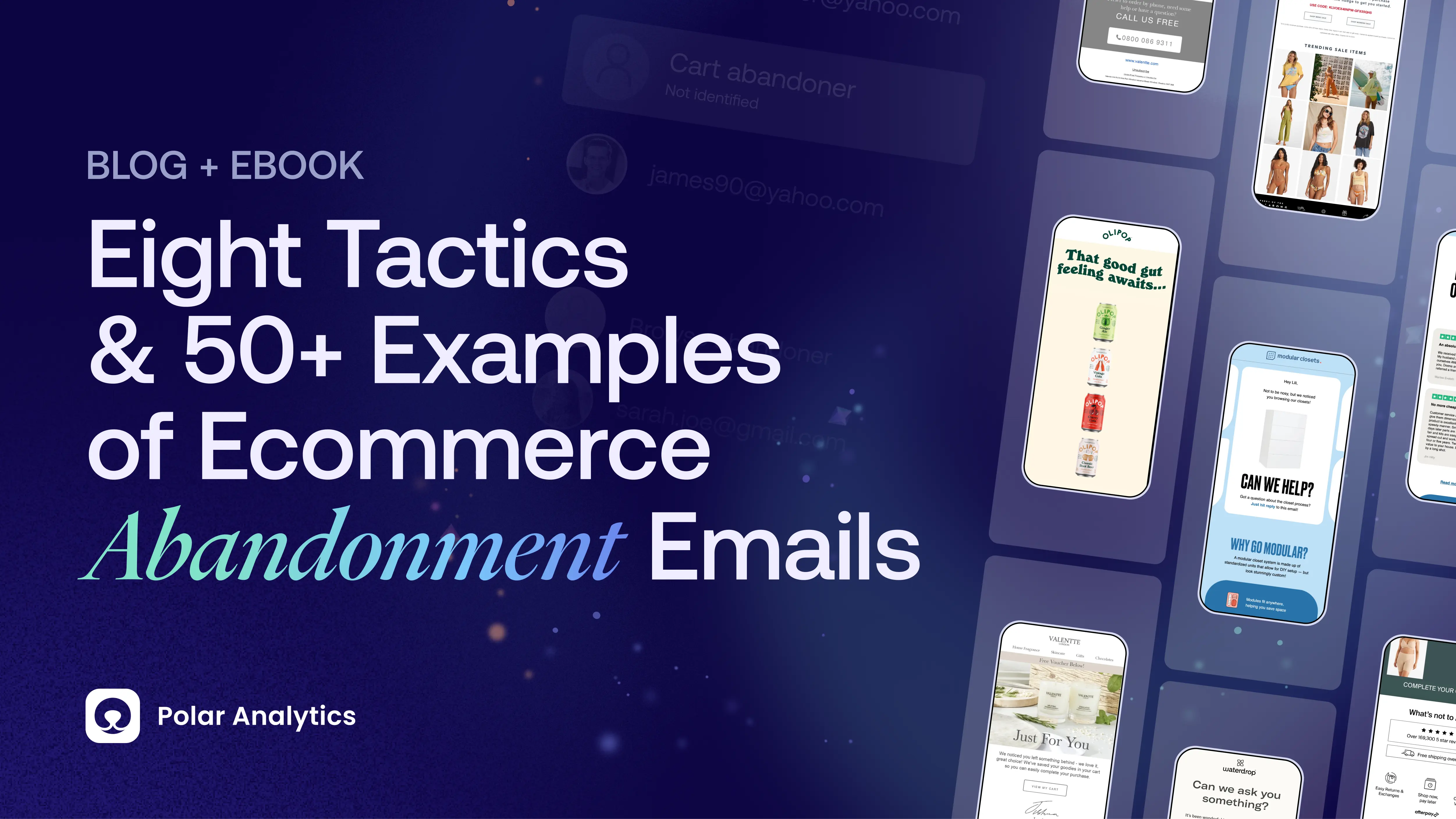
Eight Tactics & 50+ Examples of Ecommerce Abandonment Emails
Explore how targeted abandonment emails can turn missed sales into loyal customers. This blog reveals eight proven tactics, from free shipping offers to creating urgency, backed by examples from top ecommerce brands. Plus, grab a free ebook packed with actionable insights and email sequences to optimize your campaigns.

September 12, 2025
Inside Polar’s Advanced and Flexible BI for Ecommerce Brands
Introducing Polar’s ecommerce native BI, where a semantic layer, customizable metrics and dashboards, natural language queries, and flexible attribution models make data clear, reliable, consistent, and actionable.
.png)
April 5, 2025
Why Most Geo Tests Fail and How to Design One for Reliable Results
Most geo tests fail because they’re built on flawed assumptions and unclear comparisons. Learn how to design smarter, simulation-backed experiments that deliver confident, decision-ready results.
.png)
March 26, 2025
Meta's Health & Wellness Tracking Restrictions: How to Fix Attribution
Meta’s new tracking restrictions are killing your Meta ad performance—blocking “Purchase” tracking and shrinking your retargeting audiences. Fix it with first-party data. See how to restore ROAS and scale your ads.
March 17, 2025
2025 Data Reset (Part 4): How to Turn Ecommerce Insights into an Actionable Game Plan
Learn how to apply data insights to reduce CAC and boost profitability. Part 4 details actionable strategies for LTV by SKU, CAC by channel, assisted conversions, and real-time execution frameworks.
March 7, 2025
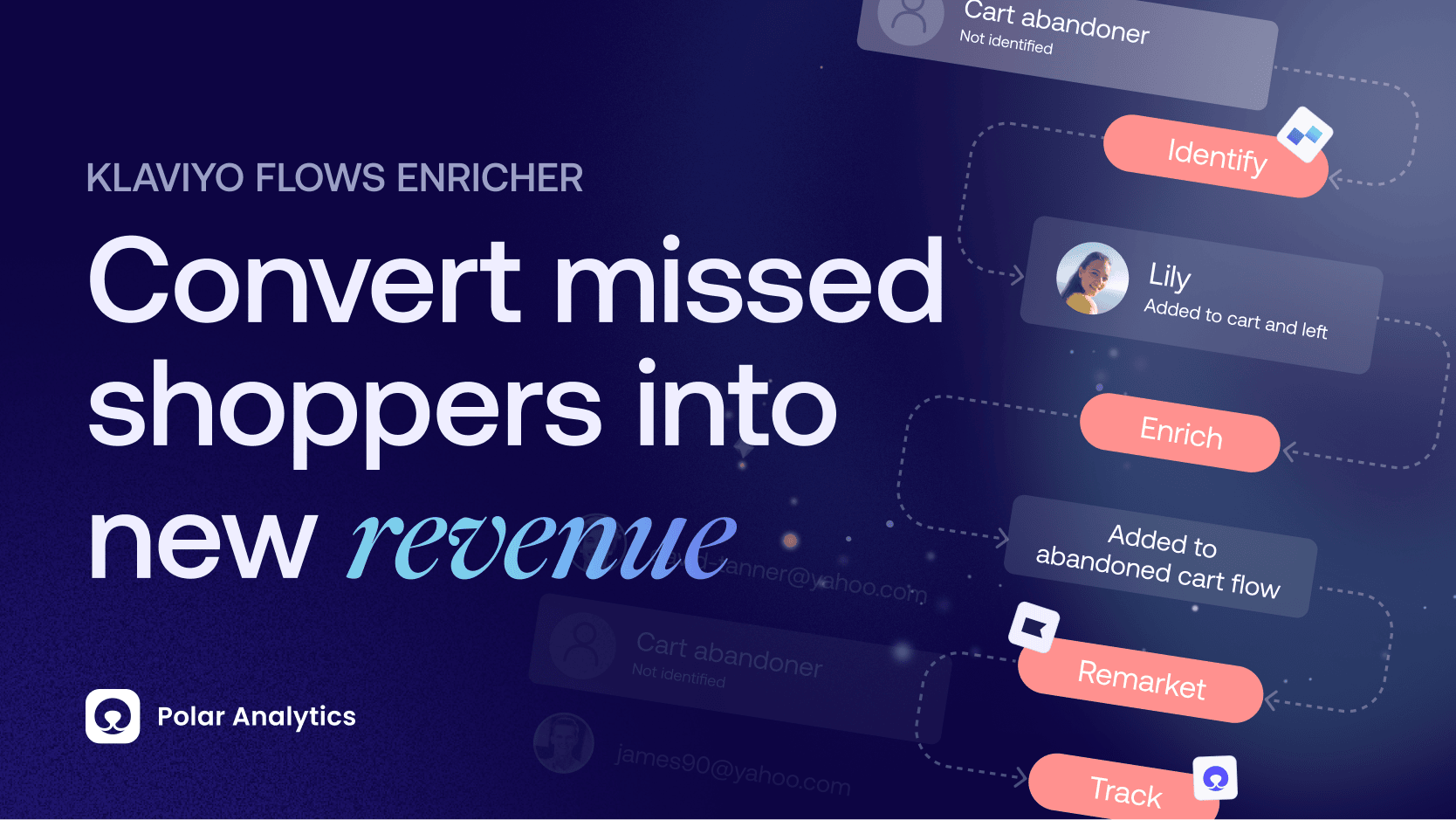
Introducing a new way to convert missed shoppers into new revenue
While you’re likely already using abandonment email flows, there’s a catch. And it’s likely costing you at least 20% in abandonment revenue …
March 5, 2025
2025 Data Reset (Part 3): How to Move Away from Vanity Metrics to Drive Real Growth
Discover how to replace vanity metrics with revenue-driving KPIs. Part 3 explains how to track blended CAC, contribution margins, and incremental ROAS to maximize profitability and optimize ad spend.
March 1, 2025
2025 Data Reset (Part 2): How to Track Accurate Ecommerce Metrics for Consistency
Learn how to clean and refine your ecommerce data to improve decision-making. Part 2 covers eliminating misleading metrics, segmenting revenue sources, and tracking net revenue for accurate CAC calculations.
February 7, 2025
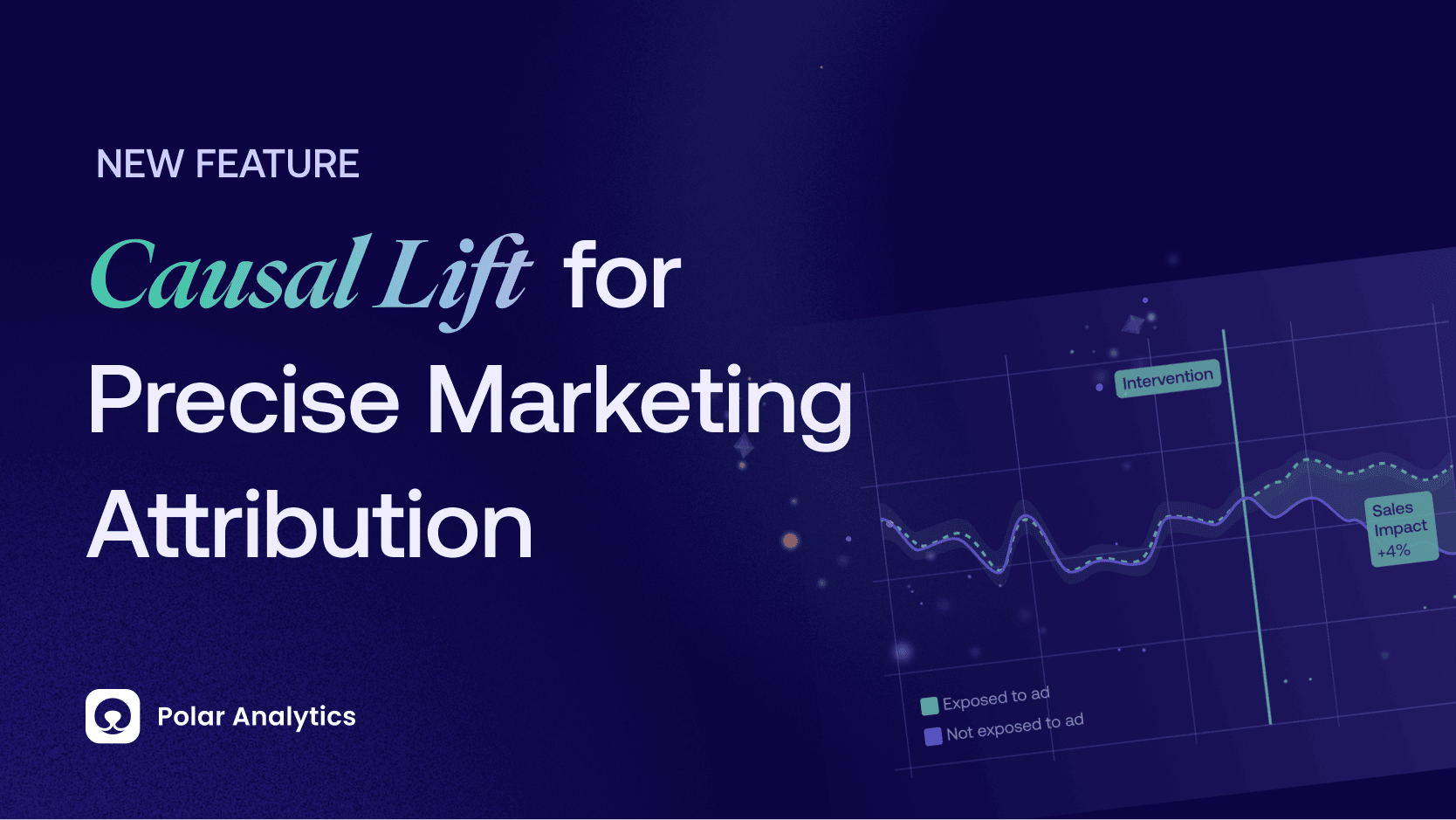
Causal Lift: Measure True Marketing Incrementality on Shopify
Introducing Causal Lift: a powerful tool to measure the true impact of your marketing efforts. Learn how brands use it to uncover incremental value, optimize budgets, and achieve precise attribution.